
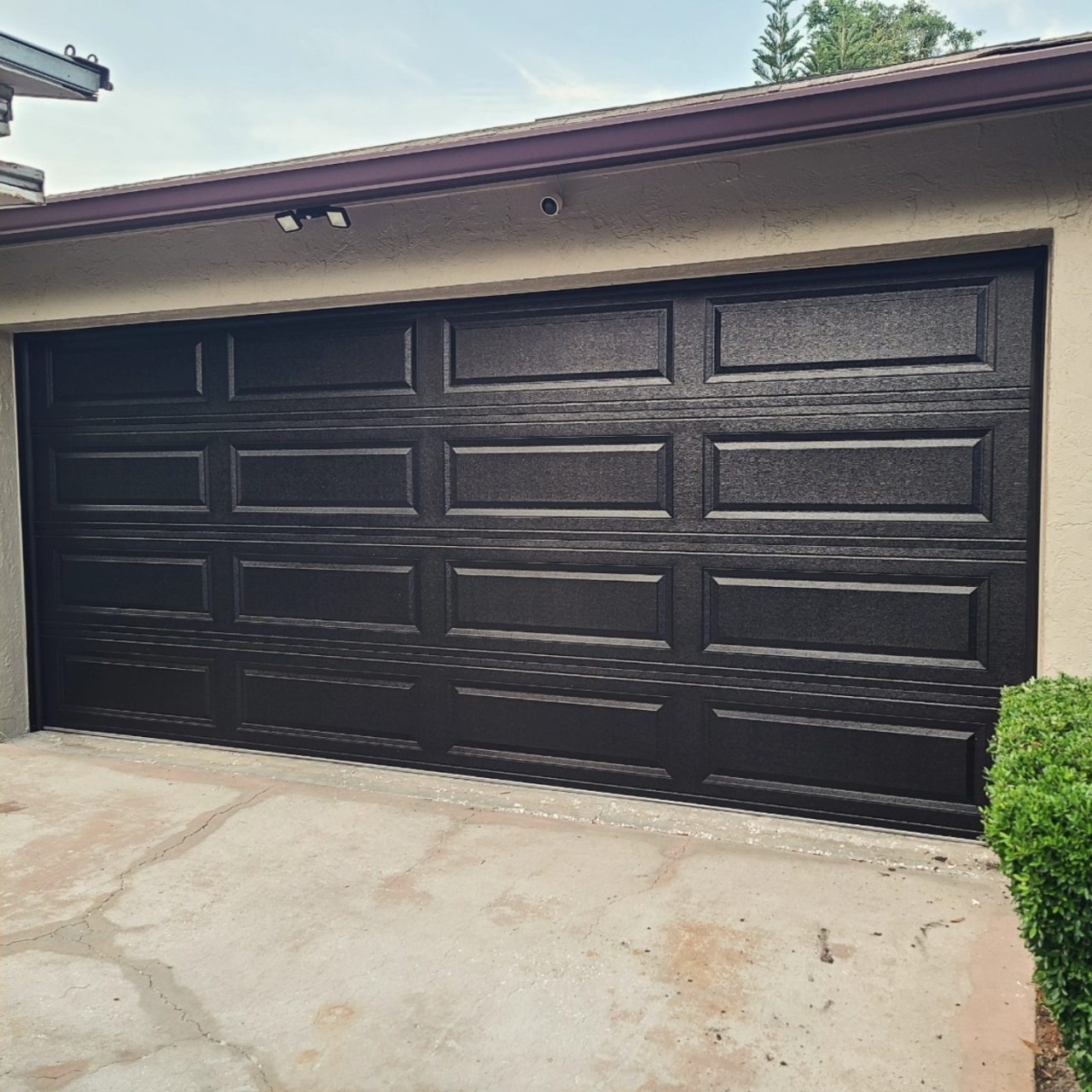
Garage Door Types & Styles
Shopping for a door comes down to three questions: how it opens, what it's made of, and how you want it to look. Down here there's a fourth, how well it stands up to a storm. Here's a plain walk through so you show up to your estimate knowing what you want.

 ★★★★★5.0 on Google, and 1,000+ reviews onlineA+BBB AccreditedLICENSED · BONDED · INSURED · FL GD13010 / GDI-09484
Three Ways A Door Moves
Almost every modern home uses the same kind, but here's the rundown anyway.
The standard garage door in the United States, and what we install most. Horizontal panels hinged together ride on rollers in a track, bending back to tuck under the ceiling. It takes openers well and is the easiest type to build for wind and impact ratings, which matters a lot in Florida.
Most PopularNarrow slats coil around a drum above the opening, with no track running back into the garage. Mostly seen on commercial buildings, though they work on homes too, especially where there's little ceiling room to work with.
Side hinged doors swing out like barn doors, slide to the side doors run along the wall, and tilt up doors are a single solid slab that pivots up. Rare in new construction now. One piece tilt up doors are hard to insulate, seal, and rate for wind, which is another reason sectional doors took over down here.
Four Materials, The Honest Take
The material sets the look, the upkeep, and how the door handles our heat, humidity, and salt air.
Steel
The most common choice, and a good one. Strong, affordable, barely any upkeep, and the usual starting point for an impact rated door. Smooth, raised panel, or pressed to look like wood. Near the coast, go galvanized and well coated, since steel can rust where it gets scratched.
Wood
Nothing matches real wood for warmth and custom looks. The catch is upkeep, and Florida is hard on it. Sun, humidity, and salt swell and warp wood and fade the finish, so it needs regular sealing. Gorgeous if you'll maintain it, frustrating if you won't.
Aluminum & Glass
Light, modern, and full of daylight, with slim frames around glass panels. The big plus near the water is that aluminum doesn't rust, so it shrugs off salt air better than steel. It dents more easily, and in a storm zone the glass has to be impact rated to meet code.
Composite & Faux Wood
The wood look without the wood headaches. Composite and fiberglass give you real grain and color over a core that won't rot, warp, or corrode, a genuine win in our climate. Quality matters since fiberglass can fade over many years, but for a lot of folks who want the wood look, this is the smart pick.
The Face It Shows The Street
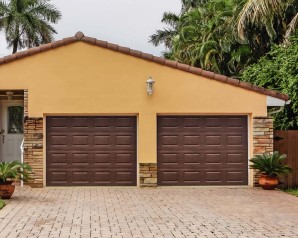
Raised Panel
The classic look, rows of rectangular panels, clean and easy to live with. Fits Colonial, ranch, and most traditional homes, which is to say most of the street.
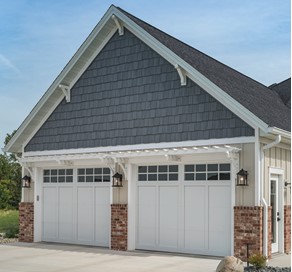
Carriage House
Mimics old swing open barn doors, usually with decorative hardware and a row of windows up top. Almost always sectional doors styled to look the part, so you get the charm without the swing. Great on Craftsman, farmhouse, and Spanish homes.
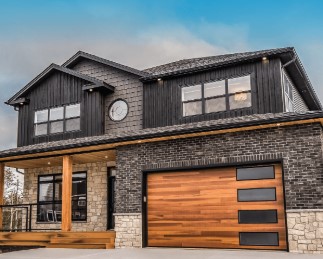
Modern
Clean and simple, either a smooth flush face or a full view door of glass and aluminum that floods the garage with light. A natural fit for contemporary and midcentury homes, and popular for shops and indoor outdoor spaces.
Why It Earns Its Keep Here
A higher R value means more resistance to heat. Doors come in three builds.
One Skin Of Steel
No insulation. Cheapest and loudest, fine for a detached garage you don't spend time in.
A Board Of Insulation
Adds insulation behind the skin. A solid middle ground for most attached garages.
Foam Between Two Skins
Highest R value, quietest, and the most solid and dent resistant.
If your garage is attached, shares a wall, or has a room above it, an insulated door keeps heat out and takes a load off your AC. One honest note: the R value on the sticker is measured at the center of the panel, so the whole installed door performs a bit lower. It's a good way to compare doors, just not a promise.
Your Door Does Real Structural Work
A garage door is usually the biggest opening on the house, so it's a weak point in a hurricane. If a door blows in, wind gets inside and pushes up on the roof and out on the walls. That's how a bad day turns into a roof off the house.
Florida code sets a wind rating for every garage door based on where your house sits. The door has to be rated for the pressure at your address.
Much of Tampa Bay is a wind borne debris zone, not only the coast. There, the opening also has to handle flying debris, which means an impact rated door or a standard door with approved storm protection.
Impact rated is not the same as wind rated. A wind rated door resists pressure. An impact rated door resists pressure and a debris strike. Insulation has nothing to do with either.
Bracing kits aren't a real substitute. A brace stiffens against pressure but won't stop debris, and most come off after the storm. An impact rated door is built for both, stays up year round, and can earn a wind mitigation insurance credit.
One thing we'll clear up: the strictest hurricane rules, the ones that require Miami Dade approvals, apply to Miami Dade and Broward counties, not Tampa Bay. Our doors meet Florida code for this area, which is what your home needs. Replacing a door here almost always needs a permit, and we handle that paperwork as part of the job. Our installation page has more on how that goes.
Not Sure What's Right For Your House?
That's normal, and it's what we're for. Browse the brands we carry and flip through brochures to get ideas, then we'll meet you at the house for a free estimate.
Frequently Asked
Let's Find Your Door
Call Trinity at (813) 279-6785 or request a free estimate, and we'll help you pick a door that looks right and stands up to Florida. Family owned, licensed and insured, serving Tampa Bay since 2007.